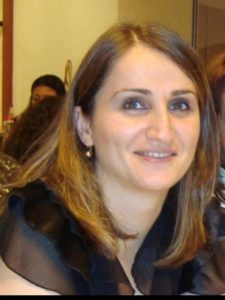
Assoc. Prof. Dr. Eylem KILIÇ
Biyografi
Assoc. Prof. Eylem Kılıç is a faculty member in the Department of Educational Sciences, Division of Instructional Technology, at Van Yüzüncü Yıl University, Türkiye. She received her undergraduate degree in Computer Education and Instructional Technology from Ankara University and earned her Ph.D. in Computer Education and Instructional Technology from Middle East Technical University. She began her academic career as a research assistant at Middle East Technical University and later joined Van Yüzüncü Yıl University as a faculty member. She has also conducted research as a visiting scholar at international institutions including Arizona State University, the Open University of the Netherlands, and Bard College Berlin.
Her research focuses on educational technology, artificial intelligence in education, cognitive load theory, and technology acceptance. Her work examines how emerging technologies such as ChatGPT, interactive whiteboards, social media platforms, and learning management systems influence learning processes, motivation, and user behavior. In her research, she applies theoretical frameworks such as the Technology Acceptance Model (TAM) and advanced analytical methods, including CHAID and PLS-SEM, to investigate technology adoption, AI anxiety, and digital literacy.
Dr. Kılıç also studies multimedia learning environments, working memory, and instructional design processes. Her research integrates perspectives from human–computer interaction, usability, and social factors to improve teaching effectiveness and learner engagement across diverse educational contexts. Recently, she has been working on algorithmic literacy among engineering students and the algorithmic divide in society.
Her publications have appeared in international journals such as Computers & Education: Artificial Intelligence, Humanities and Social Sciences Communications, Interactive Learning Environments, Computers in Human Behavior, Educational Technology & Society, and Journal of Educational Computing Research.